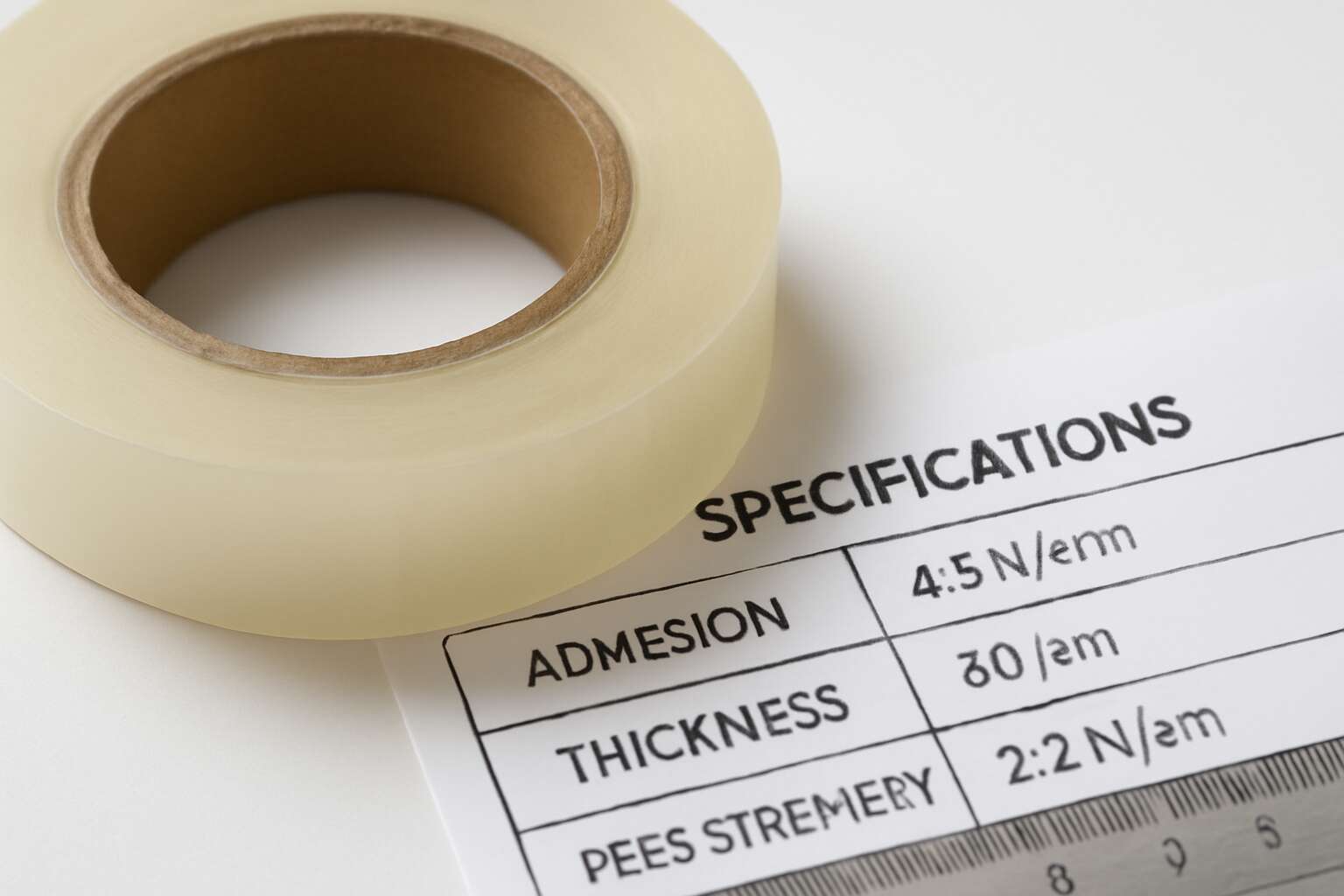
Adhesive tape properties and fundamentals
Tape construction and materials
Adhesive tape isn’t just sticky. It’s a precise instrument shaping efficiency in every seam. In South Africa’s diverse workspaces, the adhesive tape specification guides performance under heat, dust, and moisture, turning fragile assemblies into reliable bonds.
Tape construction hinges on the harmony of backing, adhesive, and liner. The backing provides strength and flexibility; the adhesive, formulated for substrate chemistry; the liner, a protective sentinel until use.
- Backing types: polyolefin, PET, coated paper
- Adhesive systems: acrylic, rubber, silicone options
- Liner configurations and thickness: release liners and handling
Understanding these elements makes the specification tangible, guiding engineers, packers, and suppliers through South Africa’s varied substrates. The result is a roll that performs where it is needed, from mining depots to courier corridors!
Adhesive types and bonding mechanisms
A single, dependable bond can move mountains in a factory. In adhesive tape specification, the unseen act of bonding governs durability and performance across South Africa’s varied environments. “A bond worth having is a bond you can’t hear,” a veteran engineer once said, and it comes from matching adhesive to substrate.
Adhesive types and bonding mechanisms: Acrylics offer temperature resilience and aging resistance; rubbers deliver rapid tack and solid adhesion to rough or low-energy surfaces; silicones stay flexible at high temperatures and resist chemicals, making them ideal for sealing roles.
- Acrylic adhesives: temperature resilience and aging resistance
- Rubber adhesives: rapid tack and adhesion to rough/low-energy surfaces
- Silicone adhesives: high-temperature flexibility and chemical resistance
Beyond the label, bonding hinges on surface energy, wettability, and the balance between tack and cohesion. Understanding adhesive tape specification helps ensure the right choice for South Africa’s substrates and conditions, from mining depots to courier corridors.
Substrates and backing materials
South Africa’s factories run on small miracles: tapes that cling when heat, dust, and time conspire against them. A veteran engineer once quipped, “the bond you can’t hear is the one that lasts.” That truth sits at the heart of adhesive tape specification, where surface energy meets a backing’s memory and an adhesive’s ambition.
Substrates span polished plastics, weathered metals, painted surfaces, and the occasional rough composite. The backing must answer those micro-geometries without sagging or restricting conformability.
- Polypropylene and PET films
- Cloth and fabric-backed
- Paper and crepe
- Aluminium foil and metalized films
Beyond the label, fundamentals dwell in how a tape wets a surface, how quickly it tacks, how it holds under heat, and how it ages under UV and humidity. The interplay of substrate, backing, and adhesive shapes performance across South Africa’s varied environments.
Environmental factors and durability
Across South Africa’s workbenches, a question lingers: can a tape truly endure heat, dust, and time? The answer lies in adhesive tape specification that favors balance—surface energy syncing with a backing’s memory and an adhesive’s ambition. In the field, the right combo becomes a quiet, steadfast partner long after the sprint is over.
Environmental factors demand sympathetic design:
- Temperature swings and heat exposure in Karoo afternoons
- Humidity and coastal salt air along the coast
- Ultraviolet light and long midday sun
- Dust, abrasion, and particulate intrusion
- Aging and creep under sustained load
Durability isn’t a one-size-fits-all story. It shifts with humidity, sun, and wear, unfolding differently from table to workshop across SA’s climates. Accelerated aging and UV exposure tests offer a glimpse into real-world performance, reinforcing that adhesive tape specification shapes a tape’s enduring partnership with every job.
Key specifications you should know
Peel strength and tack
In the realm of adhesive tape specification, peel strength and tack are the quiet engines behind every reliable bond. “Stick with what endures,” a veteran engineer once told me, and the line lands like a keystone. Peel strength is the force to pull tape from a surface; tack is the instant grip when the tape first meets the substrate. Together, they reveal the tape’s character long before failure appears on the line!
These two specs respond to dynamic variables that shape performance on South Africa’s shop floors. Consider these factors as you interpret the numbers:
- Substrate energy and cleanliness invite a stronger initial bite, when the surface is prepared.
- Thermal conditions and aging alter the adhesive’s behavior, shifting peel and tack over time.
Ultimately, this framework guides material choices for SA’s packaging, automotive, and industry sectors, translating numbers into dependable performance.
Holding power and shear strength
On South Africa’s shop floors, the bond writes the truth in the quietest way: it endures the first tug and never blinks. “The bond proves itself in the smallest pull,” a veteran engineer once told me. Holding power and shear strength are the quiet judges of performance.
In adhesive tape specification, holding power measures how long a tape resists lifting, while shear strength gauges resistance to sliding under load. They translate into uptime and finish quality, especially where vibrations and dynamic forces ride the line.
- Time under load and impulse
- Load distribution and edge effects
- Vibration and start-stop cycling
Thickness, width, and total thickness
Within adhesive tape specification, thickness, width, and total thickness shape performance on South Africa’s shop floors—where form meets function and every edge matters! Thickness determines conformability to curved surfaces and the demarcation between a secure seal and a compromised bond. Width governs handling on reels and coverage along seams, while total thickness, the sum of backing and adhesive, decides how the tape seats in gaps and under compression.
The core specs you’ll see on data sheets include:
- Thickness: measured in millimeters, a gauge of how robust the tape sits when pressed into a joint
- Width: the tape’s lateral span, affecting how much area it covers per pass
- Total thickness: backing plus adhesive, a critical figure for compatibility with rebates, fixtures, and tight assemblies
This trio interacts with substrates and finishes, surface textures, and dynamic service conditions.
Adhesive bonding temperature and cure time
On South Africa’s shop floors, the right bonding temperature isn’t just a number—it’s a gatekeeper between a seamless seal and a stubborn gap. In practice, mis-matched cure times can erase hours from a production run, especially under hot SA summers and fluctuating humidity.
Within adhesive tape specification, bonding temperature and cure time define when a bond reaches full strength and remains stable in service.
Data sheets usually present ranges. Consider these essentials:
- Bonding temperature range and dwell time: typical substrate temperatures and the period required for the adhesive to begin developing shear strength.
- Cure time and peak performance: time at temperature or ambient conditions needed for the adhesive to reach its specified holding power.
In South Africa’s varied climates, aligning cure profiles with plant conditions turns a spec into reliability and keeps the tape working when the environment tests it most.
Release liner and roll specifications
One peeled liner can mean a perfect seal or a stubborn gap that slows a line mid-shift—what a difference a liner makes! On South Africa’s shop floors, the adhesive tape specification hinges on the release liner and roll specs—the quiet gatekeepers of performance. Liner material, thickness, and coating quality influence storage stability, unwind smoothness, and how cleanly the tape peels and seats during application.
Key release liner and roll specifications to consider include:
- Release liner material and back-coating compatibility
- Liner thickness and dimensional stability
- Roll length, outer diameter, and winding tension
- Core size and weight tolerance
In varied SA climates, these details translate into reliable bonds that resist humidity and heat, keeping performance stable from start to finish.
Testing standards and measurement methods
ASTM and ISO test methods overview
Across manufacturing, standardized testing acts as the compass for the adhesive tape specification. ASTM and ISO methods dictate how peel, tack, and environmental resistance are measured, delivering consistent results across batches and continents. “Testing isn’t a cost—it’s the warranty on your tape,” says a veteran materials engineer.
Key test categories you may encounter in ASTM and ISO methods include:
- Peel adhesion
- Shear strength
- Temperature and humidity aging
For South Africa, these standard methods align local supply with global buyers, strengthening the adhesive tape specification across industries—from packaging to automotive. Tests that are traceable and repeatable form the backbone of trust in every order.
Peel, loop tack, and shear tests
Adhesive precision travels on a single thread: adhesive tape specification guided by standardized testing. It’s the unseen instructor behind every box, every car panel, every seal. “Testing isn’t a cost—it’s the warranty on your tape,” a veteran materials engineer reminds.
Standard test methods translate lab performance into real-world assurance. Peel adhesion quantifies the force to separate tape from a substrate, loop tack measures immediate stickiness, and shear tests reveal holding power under sustained stress.
- Peel adhesion
- Loop tack
- Shear strength
In South Africa, these standards align local supply with global buyers, anchoring the adhesive tape specification across packaging, automotive, and industrial sectors. Tests that are traceable and repeatable form the backbone of trust in every order.
Environmental aging and UV exposure testing
“Testing isn’t a cost—it’s the warranty on your tape,” a veteran materials engineer reminds. In South Africa, environmental aging and UV exposure tests translate lab performance into real-world assurance, guiding adhesive tape specification across packaging, automotive, and industrial sectors. ISO and ASTM standards anchor reliability, while local labs adapt them to field conditions.
The following measurement methods mirror life under sun and dust:
- UV exposure chambers simulate daylight, gauging color change, crack formation, and bond retention.
- Damp-heat and temperature cycling reproduce shifts between dew and heat, testing humidity and temperature resilience.
- Post-aging evaluations track adhesion, cohesion, and shear performance to confirm continued performance on substrates.
This approach underpins adhesive tape specification, ensuring traceable results from factory to field and making each order a quiet assurance against failure.
Adhesion to flexible and irregular surfaces
On South Africa’s factory floors, field reliability is earned in the lab; a veteran engineer speaks of testing as the warranty on your tape—an ancient covenant renewed with every cycle. That mindset shapes how we approach adhesive tape specification across packaging, automotive, and industrial settings.
Testing standards and measurement methods tailor adhesion to flexible and irregular surfaces by simulating real-life contours.
- Conformability tests on curved substrates
- Dynamic peel tests on irregular shapes
- Edge-lift checks on corners
In practice, UV exposure and damp-heat cycles extend to curved substrates; results cover peel, shear, and tack on non-flat geometries.
With ISO and ASTM anchors, results translate into clear specifications; these tests guarantee traceability from factory to field, and empower manufacturers to select adhesives that tolerate sun, dust, and bending in South Africa’s diverse environments. That is the essence of adhesive tape specification.
Industry applications and selection criteria
Electronics and electronics assembly
Electronic assemblies demand precision over bravado. A single misapplied strip can ripple through a line like dominoes, turning a smooth run into rework chaos. The adhesive tape specification set at the outset dictates thermal resilience, solvent tolerance, and long-term reliability across devices—from wearables to rugged mining gear.
Industry applications in electronics span consumer devices, automotive interfaces, and medical gear, with local realities in South Africa demanding robustness against heat, dust, and humidity. The right tape protects fine-pitch components, aids clean assembly, and minimizes residue without slowing the line—drama-free manufacturing!
Selection criteria in electronics assembly boil down to surface interaction, process compatibility, and lifecycle needs:
- Conformability to tiny features and irregular substrates
- Thermal cycling, solvent exposure, and rework tolerance
- EMI shielding compatibility and electrical cleanliness
Packaging and labeling
Every South African production line sings with quiet precision. A single misapplied strip can cost hours of downtime and turn steady throughput into rework chaos. In this arena, adhesive tape specification governs every choice, from roll stock to surface prep, keeping labels legible under heat, dust, and humidity.
Packaging and labeling demand tape that withstands the journey from factory to shelf without compromising readability. Consider these facets:
- Tamper-evident, readable printing in dusty, humid environments
- Printer compatibility for barcodes and lot codes
- Shelf life, storage conditions, and handling on busy lines
- Compliance with local packaging standards and traceability needs
Selecting the right tape hinges on surface interaction, process compatibility, and lifecycle needs—priorities that shape adhesion, residue, and removal on labels through a product’s journey. This discipline stabilizes workflows, protects brand integrity, and keeps packaging drama-free on every SA shelf.
Construction and HVAC
In South Africa’s construction and HVAC projects, misapplied tape can cost up to 15% of project hours—so a single strip can decide the day’s fate. Downtime, leaks, or delays ripple through budgets, and the true difference lies in adhesive tape specification—how a tape bonds under heat, dust, and vibration while still peeling cleanly when needed.
- Surface roughness, porosity, and cleanliness
- Service temperature range and thermal cycling
- Moisture, dust, solvents, and UV exposure
- Regulatory compliance and fire-rating considerations
From ductwork to enclosures, the right choice balances hold with removability and minimizes residue on finishes—an art-form guided by thoughtful adhesive tape specification on SA sites. It keeps projects moving and surfaces pristine, even as weather and workflow collide.
Automotive and aerospace
On South Africa’s automotive and aerospace floors, a single tape strip can decide the day’s fate—misapplied bonds conjure costly rework and delays. Some factories report up to 12% rework time tied to bond failures, a statistic that makes adhesive tape specification feel fate-driven.
Automotive dashboards, wiring channels, and exterior trims, along with aerospace fuselage and interior assemblies, demand tapes that endure heat, vibration, and routine servicing without leaving residues. They are the quiet guardians of fit, whispering between heat and vibration and the clean removal of finished surfaces.
- Dynamic load and vibration compatibility
- Chemical exposure tolerance
- Substrate and finish compatibility
- Clean removal with minimal residue
Industry players in SA prize tapes aligned with OEM finishes and lifecycle testing, ensuring performance across unpredictable climates.
Medical devices and sterile packaging
In medical devices and sterile packaging, a single strip of tape can guard against contamination and compromised sterility. The adhesive tape specification for these applications must balance biocompatibility, sterilization tolerance, and clean removal from delicate surfaces—leaving no residues that could harbor microbes or disrupt critical assemblies.
- Biocompatibility and regulatory clearance (ISO 10993, USP Class VI)
- Sterilization tolerance (steam, EtO, gamma) and shelf stability
- Residue-free, clean removal on delicate plastics and silicone
- Traceability and packaging compatibility for sterile barrier systems
In South Africa, suppliers align with healthcare standards while accommodating local climate and logistics, turning the nuance into reliable, safe performance.
Practical guidance for specifying adhesive tapes
How to write a clear tape specification
On South Africa’s factory floors, a misread spec can stop a line and drain capital. Industry chatter suggests up to 25% of rework stems from the wrong adhesive tape specification. The antidote is precise language that translates performance needs into one credible description. When you craft this specification, you cast a beacon that guides procurement, production, and quality.
- End-use environment: temperature, humidity, UV exposure
- Surface compatibility and removal requirements
- Service life and regulatory labeling needs
To shape a practical, readable specification, center clarity, consistency, and context. Consider these factors: A well-penned document becomes a conversation between engineer and supplier, smoothing decisions and reducing misinterpretation of the adhesive tape specification.
Across South Africa’s diverse climates, the right spec reads like a spell that binds grip to glide, strength to restraint. The aim is not to overformula, but to invite confidence and reduce surprises in the field.
Quality control checkpoints for incoming tape
Twenty-five percent of rework on South Africa’s factory floors traces back to mis-specified tape. That’s not mere trivia—it’s a failure of the adhesive tape specification that drains time and capital! When clarity travels from supplier to line, quality becomes a shared expectation, not a gamble.
- Incoming tape visual inspection for coating uniformity, edge curl, and liner integrity
- Documentation checks: batch/lot numbers, COA, shelf-life, and storage history
- Packaging, dimensions, and perforation or tear ratings to ensure traceability
- Storage and handling conditions aligned with climate and humidity controls
These checkpoints anchor procurement decisions and shield production from unexpected downtime. They turn a brittle handoff into a smooth conversation between supplier and plant, one that pays dividends in uptime and confidence.
Vendor selection and certification considerations
Every South African factory knows that a single mis-specified tape can stall a line for hours. The antidote is deliberate vendor selection and solid certification practices that elevate the adhesive tape specification from guesswork to a proven process.
- Quality framework: ISO 9001 presence and regular supplier audits.
- Materials and process stability: documented backing materials and adhesive data.
- Delivery reliability: capacity planning and on-time performance with contingency options.
- Compliance and safety: alignment with local standards and environmental controls.
Choosing partners who commit to transparent testing and proactive support keeps production calm and the tape specification credible.
Lifecycle and recyclability considerations
Across South Africa, up to 37% of line stoppages trace to one mis-specified adhesive tape specification, a figure that makes maintenance managers sit up and listen. When a single tape misbehaves, the entire line sighs—delivering delays and dented morale in equal measure.
Practical guidance blooms when we treat an adhesive tape specification as a lifecycle partner. From procurement to disposal, it should hint at recyclable backings, adhesive load, and compatibility with end-of-life streams—keeping waste streams clean and the line humming. From the plant floor, I watch teams breathe a little easier when the spec speaks to longevity and renewal.
Lifecycle and recyclability considerations rise to the fore as markets shift. Document recyclability data in the adhesive tape specification, align with local South African facilities, and demand transparency from suppliers. The adhesive tape specification becomes a living document, evolving with materials and standards rather than a static checkbox.
Performance and responsibility meet in the same forge, where materials speak softly and plants run cooler—even when the factory lights flicker!




0 Comments