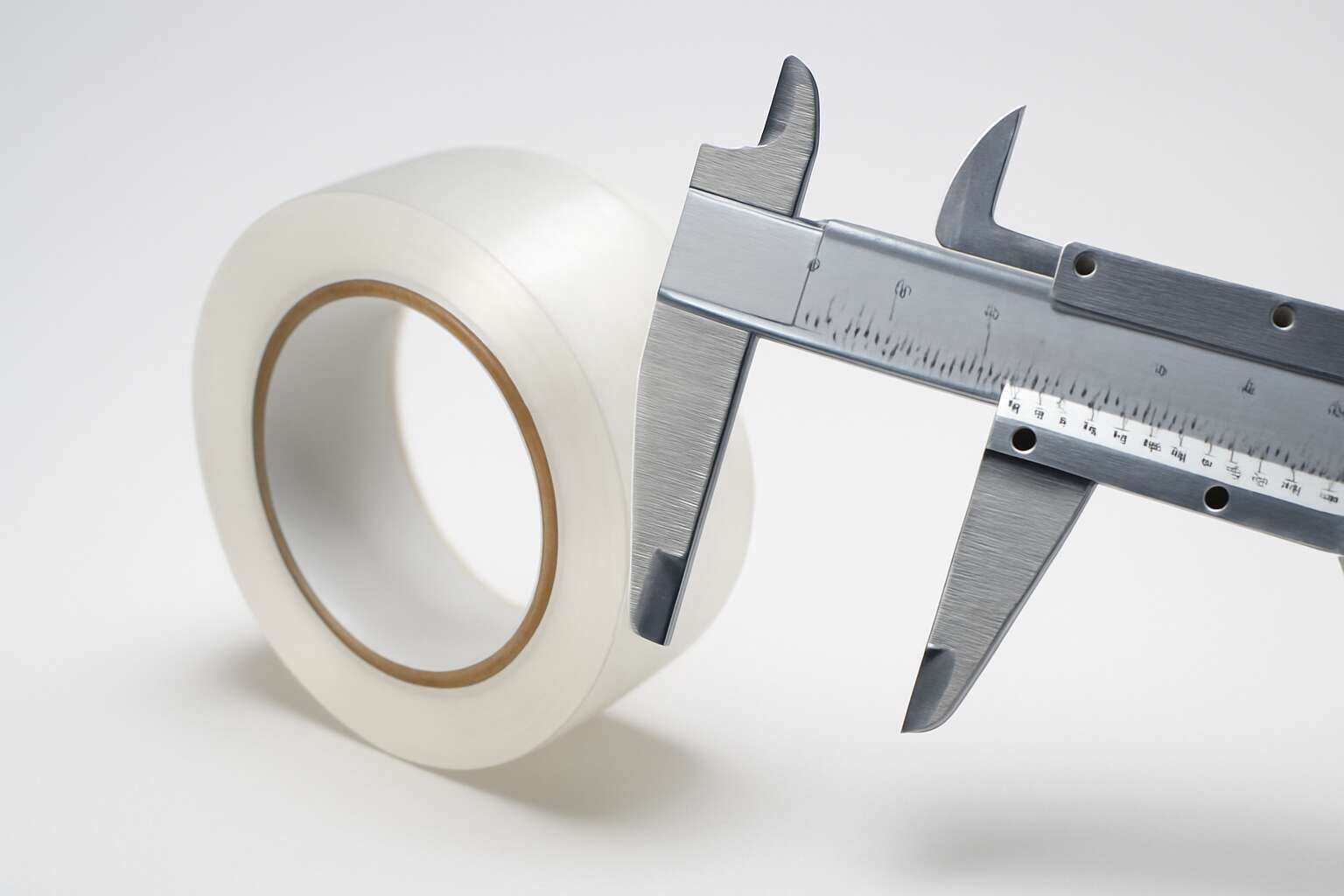
Understanding adhesive tape thickness
What thickness means in tape technology
In a workshop where the tin roof sighs with the wind, adhesive tape thickness becomes more than a measurement—it is a quiet promise to the next repair. The right thickness can keep a seam dry, a wagon tongue secured, and a craftsman confident, even after a long South African downpour.
In tape technology, thickness signals more than heft. It marks the mix of backing, adhesive, and the final layer that meets the world. The backing can be plastic, paper, or cloth, and the adhesive sticks through warmth and rain. Across South Africa, tapes hover around 0.04 to 0.25 mm, shaping how well a seal holds on rough surfaces under sun and wind.
- Backing material and its resilience
- Adhesive strength for surfaces
- Environmental tolerance (heat, humidity, sun)
The land teaches patience, and so does the tape: thickness guides trust in every fix.
Common thickness standards for tapes
From Cape Town’s coast to Gauteng’s workshop floors, a mere 0.05 mm in adhesive tape thickness can decide whether a seam stays dry when the wind howls. This quiet measure is more than inches and microns; it maps how a tape hugs uneven surfaces and endures heat, rain, and the long South African day.
Common thickness standards come in a few steady bands. In SA, adhesive tape thickness typically ranges 0.04 to 0.25 mm, guiding how a tape seals rough surfaces. Consider these archetypes:
- 0.04–0.08 mm: thin, flexible, ideal for delicate surfaces
- 0.08–0.15 mm: balanced grip for general-purpose fixes
- 0.15–0.25 mm: heavy-duty build for rugged conditions
When surface and climate align, the fix endures, and the metaphor becomes real—a trusted ally in every repair across SA’s landscapes.
How thickness affects adhesion and application
In the heat-woven air of South Africa, the thickness of a tape is the quiet architect of a seal. “Thickness is the quiet guardian of adhesion,” a foreman rasped, and the line holds—adhesive tape thickness deciding whether a seam stays dry as the day wears thin.
- Conformity to rough surfaces
- Peel and tack behavior
- Temperature and aging resilience
- Edge sealing under pressure
Understanding how thickness interacts with backing and surface irregularities reveals why some spots seal while others fail. A thicker backing resists shear yet may stiffen the bend; a thinner layer kisses contours but softens under sun and heat.
From Cape Town’s docks to Gauteng’s benches, this quiet measure travels with every repair. I have watched it endure sun and wind, a gatekeeper of reliability whispering through surface, climate, and daylight—the shadowy ally that keeps the line intact.
Thickness versus width and length considerations
In the workshop’s heat, outcomes hinge on adhesive tape thickness. “Thickness is the quiet guardian of adhesion,” a foreman rasped, and the line holds—seals stay dry when the day wears thin.
Thickness versus width and length are not separate puzzles; they share the same rhythm. Understanding adhesive tape thickness helps explain why a thicker backing resists shear yet stiffens the bend; a thinner layer kisses contours but softens under sun and heat.
- Backing stiffness vs flexibility balance
- Surface roughness and contour intimacy
- Edge sealing under sustained pressure
- Unwind and alignment constraints during application
From Cape Town’s docks to Gauteng’s benches, adhesive tape thickness travels with every repair. I have watched it endure sun and wind, a gatekeeper of reliability whispering through surface, climate, and daylight.
How adhesive tape thickness is measured
Tools and methods for measuring thickness
Across South Africa’s bustling packaging lines, a mere whisper of difference in adhesive tape thickness can tilt performance from dependable to questionable. Measuring thickness isn’t about bravado; it’s about consistency, repeatability, and confidence that every roll behaves the same way in real-world use.
- Digital calipers for quick external checks with high-resolution readouts
- Micrometers for precise edge-to-edge thickness on samples
- Non-contact optical gauges that assess finished tape without distortion
Practical measurement relies on trusted instruments and a disciplined eye for variation. When a reading strays, it speaks softly but clearly about how adhesive tape thickness stacks up against expectations, influencing how the tape performs in its next application and how customers perceive consistency.
Manufacturing tolerances and variations
In South Africa’s bustling packaging lines, a whisper of difference in adhesive tape thickness can tilt a run from smooth to balky. Measuring isn’t bravado; it’s the handshake that says this batch will behave. The quest is not perfection, but reliable repetition, every roll carrying the same promise.
Manufacturing tolerances hinge on three pillars:
- Consistency of raw adhesives and backing materials
- Controlled coating weight and unwind tension
- Environmental and storage factors that drift readings
These micro-variations ripple through performance and customer perception, especially for adhesive tape thickness, where the finished tape must hold together under pressure, seal reliably, and age well in the South African climate.
Measurement challenges across tape types
In South Africa’s bustling packaging lines, a mere 0.02 mm drift in adhesive tape thickness can tilt a run from smooth sailing to a balky stall. Measurements aren’t bravado; they’re the quiet pact that this batch will behave, roll after roll, under pressure and heat!
To map thickness accurately across tape types, engineers lean on a few trusted methods. The choice depends on opacity, gloss and layered structure. Tools include:
- digital micrometer for point checks
- optical profilometer for non-contact profiles
- X-ray thickness gauge for multi-layer builds
In practice, readings drift with unwind tension, soft adhesives, or liner complexity; climate swings in SA—humidity, heat—alter backing stiffness and adhesive performance. The result is a tension between what the instrument reads and what the roll delivers.
Units, conversions, and labeling practices
In the SA packaging line, adhesive tape thickness isn’t a guess; it’s the line’s quiet heartbeat. Measurements translate uncertainty into reliability, with micrometres used for film layers and millimetres for the overall build. Small deltas can flip a roll from flawless to finicky, so the numbers must be respected at every unwind!
- Micrometres (µm) for film and adhesive layer thickness
- Millimetres (mm) for overall tape thickness
- Inches or mils for legacy gauges
Conversions between metric and imperial are routine and must be documented so the spec travels with the product, not the reader. Labels should clearly show the unit used, the decimal tolerance, and the calibration timestamp to safeguard traceability across batches and lines.
Impact of thickness on performance and reliability
Adhesion strength relative to thickness
In controlled testing, even a 0.1 mm difference in adhesive tape thickness can swing strength by several percent. The margin may seem microscopic, but in the rattling corridors of a South African factory, every fraction matters to safety and efficiency.
Thickness shapes how the tape behaves under vibration, temperature shifts, and substrate roughness. A thicker layer often delivers better shear resistance and longer reliability in harsh conditions, but it can hamper conformability and increase creep. The moral is balance—thickness acts as a quiet translator between the adhesive and the world, especially on South Africa’s seaside humidity or dusty workshops.
- Substrate texture and cleanliness
- Environmental conditions like humidity and temperature
- Adhesive formulation and backing material
Peel force, shear, and holding power
In a bustling South African workshop, a 0.1 mm shift in adhesive tape thickness can tilt performance by several percent—a dramatic swing in peel force, shear, and holding power.
Thickness acts as a translator between the sticky heart and the world around it. A thicker layer often delivers tougher shear resistance and steadfast holding in humid seaside air, dusty floors, or temperature swings—and yet it may stiffen conformability and invite creeping under vibration.
For a balanced performance, designers weigh:
- peel force and tack
- shear holding under vibration
- reliability across substrates and environments
In SA facilities, the right thickness becomes a quiet guardian of safety and efficiency amid busy shifts and shifting conditions.
Environmental effects: temperature and humidity on thick tapes
Across a bustling South African workshop, a 0.1 mm nudge in adhesive tape thickness can tilt outcomes by several percent. It’s not merely a number; it’s the translator between a sticky heart and the world it clings to. That tiny delta can swing peel, shear, and holding power when lines hum and air carries dust and heat.
Environmental effects matter. Temperature swings push the viscoelastic balance; thicker layers stiffen in cold and soften in heat. Humidity invites moisture uptake and slow creeping under vibration, especially along coastlines where salt air lingers. In the right climate, adhesive tape thickness stands as a stubborn ally; in the wrong one, it falters.
Consider these ambient factors as quiet players:
- Temperature swings changing tack and stiffness
- Humidity and moisture ingress affecting adhesion
- Substrate variability altering surface energy
Durability on different substrates
In a bustling workshop, the impact of adhesive tape thickness on performance reveals itself with quiet certainty. A mere 0.1 mm shift can tilt the balance between a confident seal and a reluctant failure, especially on stubborn substrates. The durability of the bond hinges on how the thin film spreads force—peel, shear, and holding power—under heat, dust, and vibration.
Durability shifts with the surface under it; the same thickness behaves differently on metal, glass, plastic, or porous materials.
- Metal and coated metal: a slightly thicker film resists peel during vibration without sacrificing conformability.
- Glass and ceramic: enough thickness helps seal micro‑imperfections and edge lift on slick surfaces.
- Plastic and low-energy substrates: a modest thickness boosts contact, guarding against slipping.
- Porous woods and cardboards: thicker tapes bridge gaps but can trap dust if over‑applied.
Flexibility and conformability of thicker vs thinner tapes
In a busy South Africa workshop, the impact of adhesive tape thickness on performance is a quiet, telling science. A mere 0.1 mm shift can tilt the balance between a confident seal and creeping failure as machines hum and heat rises. The right thickness ensures peel, shear, and holding power spread evenly, turning rough surfaces into a steady platform for protection and reliability. This subtle dimension guides every bonded moment!
Flexibility and conformability hinge on whether the film is thick or thin. Thicker tapes offer durable grip on irregular edges but can resist wrapping on curved contours. Thinner variants glide along curves with ease yet risk edge lift under heat or vibration.
- Conformability on curved or contoured substrates
- Gap bridging on porous materials
- Dust and debris management when applying
Choosing the balance crafts a bond that remains steadfast, even when the workshop clock ticks louder.
Applications and selecting the right thickness for your project
Assessing surface, load, and environment requirements
Adhesive performance hinges on the right adhesive tape thickness. The right balance can mean a seal that lasts in sun, dust, and heat. A precise thickness is a quiet multiplier for efficiency in assembly lines and product packaging alike.
Applied well, the choice translates to real-world results. Consider these factors when selecting thickness:
- Surface texture and cleanliness
- Expected load and movement
- Temperature, humidity, and exposure to chemicals
- Conformability and flexibility on irregular substrates
Assessing surface, load, and environment requirements helps pick the right thickness for your project. In South Africa, where outdoor exposure varies, a slightly thicker option can compensate for dust and UV. Keep the balance between grip and peelability in mind.
Electrical, automotive, and packaging tape thickness guidelines
In the quiet hum of production lines, adhesive tape thickness stands as a secret sentinel. In South Africa, where sun and dust test every layer, the right adhesive tape thickness keeps seals intact and lines pristine. A single choice can tilt performance from flawless to fugitive, turning routine assembly into a quiet, lingering inspection of reliability.
- Electrical: Electrical tasks demand dielectric integrity; adhesive tape thickness shapes insulation and edge sealing.
- Automotive: Automotive surfaces need conformability and vibration resistance; thickness balances fit and endurance.
- Packaging: Packaging needs protection with clean removal; thickness provides toughness without excess bulk.
Choosing the right thickness is reading the substrate and the environment, letting adhesive tape thickness become the quiet multiplier that anchors projects from workshop to warehouse.
Balancing thickness with flexibility and cost
In South Africa, the quiet arithmetic of tape thickness can tilt a line from flawless to faltering. A recent industry snapshot shows that 28% of rework traces back to a mismatch in thickness rather than the product itself.
Choosing thickness is reading the substrate and the weather—where the heat, dust, and vibration test a seal’s stubborn integrity. When adhesive tape thickness hits the right balance, performance feels almost telepathic.
Here are the considerations that allow thickness to anchor reliability without becoming burdensome:
- Substrate type and surface energy
- Expected thermal and mechanical stress
- Cost versus lifecycle durability
In a market hungry for lean efficiency, thickness becomes a quiet, persistent variable—integral to projects that move from workshop to warehouse.
Industry-specific tips for tape thickness selection
In South Africa, 28% of rework traces back to a mismatch in thickness rather than the product itself. Applications span packaging, electronics, and construction, and in each, adhesive tape thickness becomes a quiet arbiter of reliability. I’ve seen lines fail for want of the wrong thickness.
- Electronics and dashboards: opt for thinner, ultra-conformable tapes to avoid gaps.
- Industrial seals and HVAC: thicker tapes handle vibration and heat excursions.
- Packaging and signage: prioritize unwind and adhesion balance for quick assembly.
Field testing in real conditions—heat, dust, and vibration—lets thickness prove itself beyond the spec sheet.
Standards, testing, and best practices for adhesive thickness
Industry standards and regulatory guidelines
Standards shape how adhesive tape thickness is defined, tested, and approved. In South Africa, adherence to ISO and SABS guidelines ensures consistency from run to run. Testing plans blend non-destructive checks with periodic cross-sections to verify uniformity, while regulatory frameworks guard against substrate mismatch and premature failure.
- International and national standards guide thickness measurement and conformity (ISO, SABS, and regional equivalents).
- Uniform thickness verification using calibrated gauges, non-contact methods, and controlled sampling.
- Comprehensive documentation: batch records, test certificates, and traceability to substantiates claims.
Adopting these practices reduces waste and fosters trust with customers who rely on predictable performance across applications.
Quality control, inspection, and test methods for thickness
Across South Africa’s manufacturing floor, adhesive tape thickness precision isn’t flashy, but it is decisive. When thickness stays within spec, performance is predictable and waste falls away, often translating to up to 15% fewer rejects in high‑volume lines.
Standards from ISO and SABS shape how thickness is defined, measured, and approved. Testing plans blend non-destructive checks with periodic cross-sections to verify uniformity, while regulatory frameworks guard against substrate mismatch and premature failure.
Best practices put quality control into a living system: robust documentation, traceable records, and data-driven reviews keep adhesive tape thickness claims credible across substrates and climates.
- Traceability from raw materials to finished rolls
- Calibration and maintenance of measurement equipment
- Audit-ready test documentation and supplier compliance
Through this lens, thickness becomes more than size—it is a promise to South African customers that performance travels from factory floor to field with consistency.
Shelf life, aging, and thickness changes over time
In South Africa’s warehouses, adhesive tape thickness isn’t glamorous, but it’s decisive. Time and temperature conspire to nudge thickness away from spec, especially on slow‑moving stock. “Thickness is a time traveler,” a QA lead jokes, and the observation lands when storage mischief shows up as drift. This is why shelf life and aging matter for adhesive tape thickness.
Standards from ISO and SABS shape how aging effects are tested and approved. A blended plan—accelerated aging, non-destructive checks, and periodic cross‑sections—helps verify thickness durability without halting production. The aim is to catch drift early, preserving performance as conditions vary in South Africa’s substrates and climates.
- Storage conditions: temperature and humidity
- Light exposure and UV stability
- Substrate compatibility and joint aging
- Regional climate variations across SA
Best practices turn shelf life into a live system: meticulous documentation, calibration of measurement gear, and audit-ready aging records for adhesive tape thickness. Regular reviews feed into the specification, ensuring that adhesive tape thickness remains aligned with field requirements across substrates.
Supplier considerations and obtaining accurate thickness specs
Standards from ISO and SABS frame how aging effects are tested and approved. They codify measurement methods, acceptance criteria, and the terminology that keeps everyone honest about adhesive tape thickness. When audits land in the warehouse, the spec stands as the referee, not a guessing game.
A blended plan—accelerated aging, non-destructive checks, and periodic cross-sections—helps verify thickness durability without halting production. These standards guide how drift is detected early, and we treat it like a weather forecast for tape—informative, occasionally dramatic, yet essential across SA substrates.
- Clear thickness specifications in supplier datasheets.
- Defined tolerance bands and measurement methods.
- Full traceability: calibration records and lot history.
- Alignment with regional substrate conditions and regulatory needs.




0 Comments